





Jakarta+
Vel ipsam temporibus nisi eos unde rerum vitae
19 July 2025

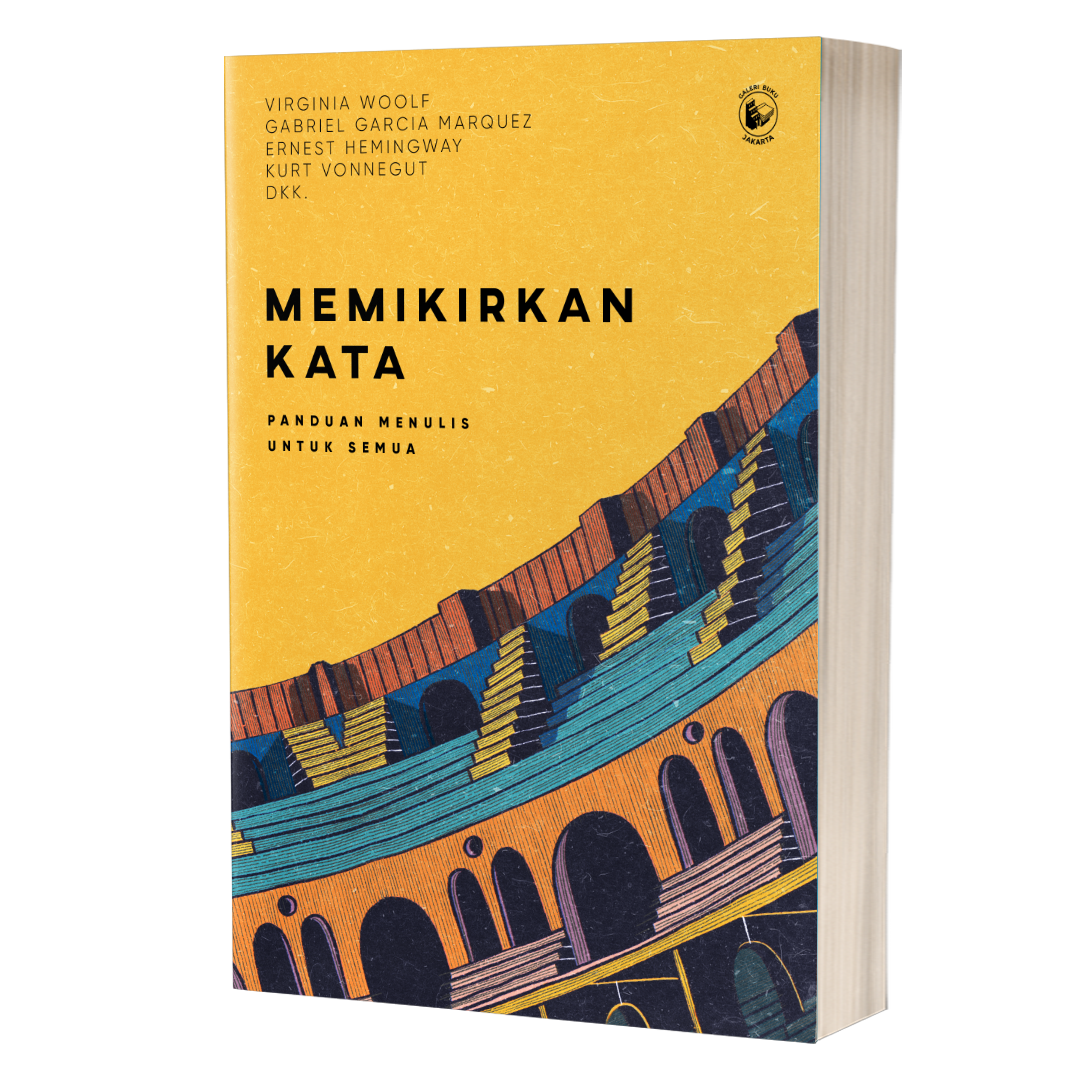
Enim iusto porro sunt repudiandae quos aut dolorem perferendis. Facilis enim enim architecto voluptates facilis. Quae laudantium asperiores officia atque debitis ex eum amet. Placeat eaque vitae vel dolor.
In the course of my research for my new novel, in which I
bring Virginia Woolf back to life in modern-day New York, I set out one cool
clear morning to find her books in Manhattan bookstores. Borders had gone,
Barnes and Noble was still open, but huge red SALE notices spread across the
books like flames, and no sign of Woolf. I at last tracked down her work in a
small and beautiful independent bookstore, but only by thinking laterally and
going upstairs to the European languages departments, which had a few copies in
Spanish and Italian translation.
Earlier, on the ground floor, in English Fiction, I had
asked a charming young man to help me. “Yes, I’m familiar with her work,” he
said. My heart lifted. And then sank disproportionately when he continued,
after a pause, “I associate her poems with those of Sylvia Plath.” Alas, though
Woolf wrote rhythmic poetic prose, she was never a poet. The only possible
association was that both women lost their lives to suicide.
I was recently at a Polari writers’ event at London’s
prestigious South Bank Centre and one of the acts, a male poet, talked about
his teenage fixation on Sylvia Plath—the crush of a (then) unhappy boy who had
found his bard of sadness and anger. He raised a swell of wry laughter and
fellow feeling from the room. It was fond; it acknowledged that many had shared
his crush; it did not undervalue Plath, but implied the recognition, by a group
of people who had lived to adulthood, that suicide is not a happy ending.
Would I have felt differently if the poet had been a woman,
describing her fixation on Sylvia Plath to an audience of teenage girls?
Probably. I would have feared that those teenagers were too young to see
tragedy and comedy are emotional poles you can, if you’re lucky, move between,
alive. So young, indeed, that Plath could be a role model.
In short, I fear the cult of self-destructive female
creativity, a shrine in which images of Sylvia Plath, Anne Sexton, and Virginia
Woolf gleam like holy relics in the twilight. The Ranker website
puts Woolf and Plath respectively at Number 2 and Number 3 in their list of
“Famous Writers Who Committed Suicide,” after Ernest Hemingway at Number 1.
This sort of thing makes me shudder, put on my coat and go out swiftly for a
walk.
But then, Woolf herself was a great walker, who frequently
wrote light-filled sketches of the landscapes near Rodmell where she lived, and
the garden of her house, which at first glimpse gave her “profound pleasure.”
“An infinity of fruit-bearing trees; the plums crowded so as to weigh the tip
of the branch down; unexpected flowers sprout[ing] among the cabbages.”
I hazard a guess that Charles Beresford’s much-reproduced
marmoreal profile portrait of Virginia Stephen, as she then was—a black and
white photo of a pale young virgin in a pale dress, bloodless, precious,
isolated on a blank background—has had nearly as much influence on the
melancholy glamour of her reputation as the cold March day in 1941 when she
drowned in the River Ouse. When I decided to create a 21st-century fictional
avatar of the writer I so admire, I found myself drawn instead to a sunlit, active,
amused Virginia. This may surprise some of her fans, but listen to the author’s
real-life diary entry of Saturday, September 13, 1919: “I think perhaps nine
people out of ten never get a day in the year of such happiness as I have
almost constantly.”
Woolf is still an icon for women writers everywhere, taught
not just in anglophone countries but in Turkey, Libya and elsewhere where
female freedom cannot be taken for granted. How did I have the hubris to try
and recreate her? Though I am a novelist, I spent many of my early years in
universities, and have read and re-read Woolf throughout my life. The first
time, I was a 17-year-old undergraduate, disappointed to find the Oxford
syllabus did not go beyond 1850. Longing for modernity, I read Woolf’s brief,
effervescent Jacob’s Room, in fits and starts of wonder. Years
later I studied her as a PhD student; at 40, I wrote the text and booklet for a
British Council Virginia Woolf exhibition that traveled worldwide. Preparing to
write my novel, I began again.[1]
The more I re-read her, the more the Woolf I wanted to
inhabit my pages danced and laughed. Like her diaries, my Virginia is full of
life, ideas, jokes, sensuality. She is much more joyous than melancholy. She
is, in fact, exactly what I take Woolf to have been: a person with a great
capacity for pleasure who at times became dangerously ill with depression.
Unless you think it right to let an illness define a person, it’s just as
possible to interpret Woolf via her coexisting gift for happiness. Novelist Elizabeth
Bowen remembered her on the floor mending a curtain, “and she sat back on her
heels and put her head back in a patch of sun, early spring sun, and laughed in
this consuming, choking, delightful, hooting way.”[2]
And so my novel gave her a new chance to be alive, and
happy. My Virginia shops in Bloomingdales, buys an indigo-blue broad-brimmed
hat, drinks in the Algonquin with the ghost of Dorothy Parker and, after too
many glasses of champagne, leap-frogs a fire-hydrant. She flies to Istanbul,
the city which (as Constantinople) enthralled her in her long-ago real-life
girlhood, finds two lovers, one male, one female, and attends an international
conference on Virginia Woolf, where she naturally steals the show.
Nearing the anniversary of the day when Virginia Woolf died,
I raise my glass to her work and her dark and bright moments of being. My
fictional Virginia’s last words to her audience of young writers play on her
real-life masterpiece, A Room of One’s Own: “The light is on you.
It is in this room. You are in the sunshine which, while it’s here, feels as
though it will last forever. Write while you’re here. Write while you can . .
.”
[1] And so
my novel gave her a new chance to be alive, and happy. My Virginia shops in
Bloomingdales, buys an indigo-blue broad-brimmed hat, drinks in the Algonquin
with the ghost of Dorothy Parker and, after too many glasses of champagne,
leap-frogs a fire-hydrant. She flies to Istanbul, the city which (as
Constantinople) enthralled her in her long-ago real-life girlhood, finds two
lovers, one male, one female, and attends an international conference on
Virginia Woolf, where she naturally steals the show.
[2] And so
my novel gave her a new chance to be alive, and happy. My Virginia shops in
Bloomingdales, buys an indigo-blue broad-brimmed hat, drinks in the Algonquin
with the ghost of Dorothy Parker and, after too many glasses of champagne,
leap-frogs a fire-hydrant. She flies to Istanbul, the city which (as
Constantinople) enthralled her in her long-ago real-life girlhood, finds two
lovers, one male, one female, and attends an international conference on
Virginia Woolf, where she naturally steals the show.
19 July 2025
29 May 2026
06 October 2025
09 October 2025
27 November 2025
